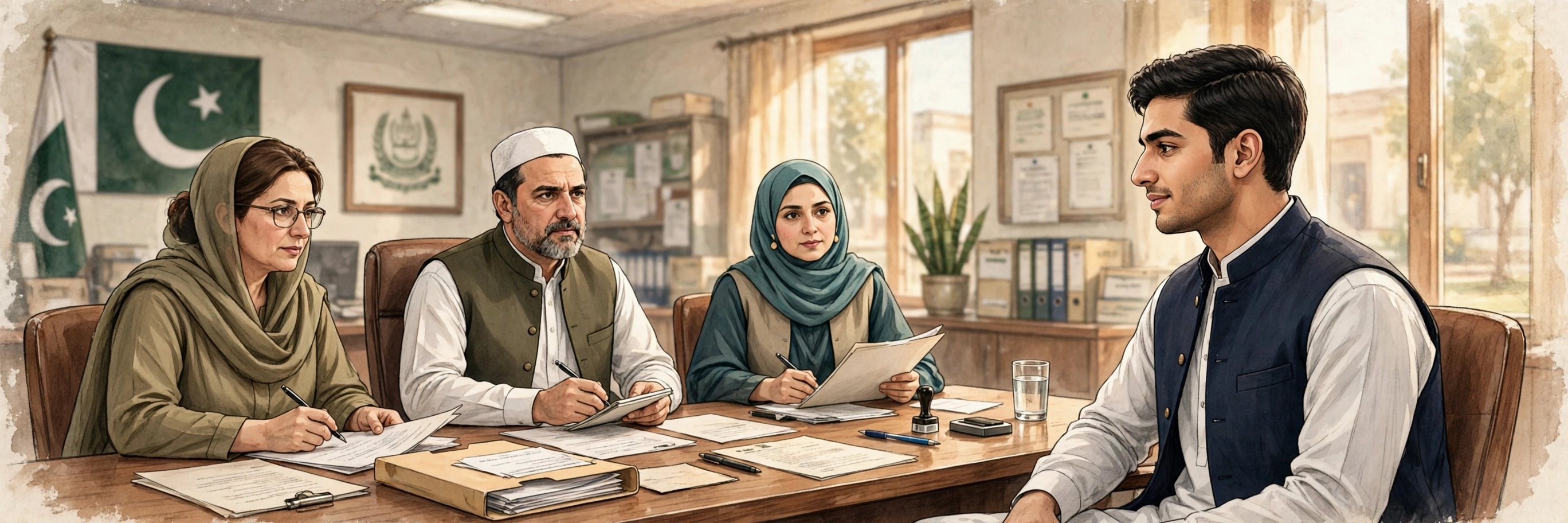
You have finished your degree, your result is good, and you are applying to jobs every day. But your inbox stays silent. For most fresh graduates in Pakistan, the problem is not their ability. It is their CV. Recruiters spend only a few seconds on a first CV before deciding whether to read more, and a poorly made CV gets rejected before anyone notices the degree behind it.
The good news is that a strong first CV is not difficult to make. It needs no decoration and no paid designer. It needs the right structure, honest content and attention to small details.
What a recruiter looks for in a fresh graduate CV
A recruiter hiring a fresh graduate is not expecting years of experience. They are looking for three signals. First, is this candidate relevant to the job, meaning their degree, subjects or project match the role. Second, can this candidate actually do basic work, which shows through internships, projects and practical skills like Excel, typing or a software tool. Third, is this candidate careful and serious, which shows through a clean layout, correct spellings and complete contact details.
Every section of your CV should help answer one of these three questions.
The right structure, section by section
Keep your CV to one page. Two pages are acceptable only if you genuinely have internships and projects that need the space.
Start with your name in a clear heading, followed by your city, mobile number and email address on one line. Use a professional email address based on your own name. An email with nicknames or random numbers makes a poor first impression.
Next, write a short profile summary of two or three lines. Say who you are, what you studied and what kind of role you are looking for. For example, a commerce graduate with an internship in accounts, skilled in MS Excel and looking for a junior accounts role in Lahore. Avoid empty lines about being hardworking and passionate. Every graduate writes those, so they carry no weight.
Then list your education, starting from your most recent degree. Write the degree name, the institution, the board or university, the year and your marks or CGPA. Include your intermediate and matric only in brief lines below your degree.
After education comes the section that matters most for a fresh graduate: experience and projects. If you did any internship, even an unpaid one of four weeks, write it here with the organisation name and what you actually did, in short bullet points. Then describe your final year project in two or three lines: what it was, what tools or methods you used, and what result it produced. Class projects, freelance tasks and volunteer work can also go here if they relate to the job.
Finish with a skills section and a short languages line. List real skills only, grouped simply, for example computer skills, software, or laboratory techniques, followed by languages such as Urdu and English with your level.
How to write about skills honestly
Skills are where fresh graduates damage their own chances most often. Writing expert in Excel when you can only make a basic sheet will be exposed in the first test or interview, and the rejection that follows is final. Write the skill and, where you can, the level or the proof. Basic MS Excel with data entry and formulas is believable. Advanced Excel with pivot tables and dashboards is believable only if you can show it.
Match your skills to the advertisement. If a job asks for typing speed, data entry and MS Office, those exact words should appear in your CV if you truly have them. Many companies filter CVs by searching for the words used in their own advertisement.
Details that quietly decide shortlisting
Check your mobile number digit by digit. Candidates lose interviews every week because one digit in the number on their CV is wrong. Spell your own name exactly as it appears on your CNIC. Use one simple font throughout, keep the layout black and white or in one soft colour, and save the file as a PDF named with your own name, for example Ahmed-Raza-CV.pdf. A file named CV final final 2 is a small thing, but it tells the recruiter how you work.
Do not add your CNIC number, your full home address or your father name and religion to a private sector CV unless the employer asks for them. Government application forms ask for these details separately, inside the form, which is where they belong.
Mistakes to remove from your CV today
Remove the objective statement copied from the internet that begins with seeking a challenging position in a reputed organisation. Remove references available on request, it adds nothing. Remove the declaration and signature block, that belongs to old government formats, not a modern CV. Remove photographs for private jobs unless the advertisement asks for one. And never copy a senior person CV format and fill it with things you have not done. Recruiters read hundreds of CVs and recognise copied content at a glance.
One CV does not fit every job
Keep one master CV with everything in it, then make a small copy for each serious application. Move the most relevant project or internship to the top, adjust your summary line to the role, and make sure the skills the advertisement names are visible if you have them. This takes ten minutes per application and doubles the value of the effort you already made.
Final word
A fresh graduate CV is not a record of your whole life. It is a one page argument that you are relevant, capable and careful. Build it on that idea, keep it honest, and update it every time you learn a skill or finish a project. Then apply consistently, because shortlisting is a numbers game played with a good CV, not a lottery played with a weak one.
You can create your profile and browse verified entry level jobs on Jobswala, where applying is always free and every employer is checked before their job goes live.